Rewiring soil fertility through biological networks.
A unified protocol of ultra-high-concentration mycorrhizal crop inoculants and premium Welsh marine seaweed extracts, optimized for broadacre agriculture and verified by satellite AI.
Staggering Agronomic & Quality Enhancements
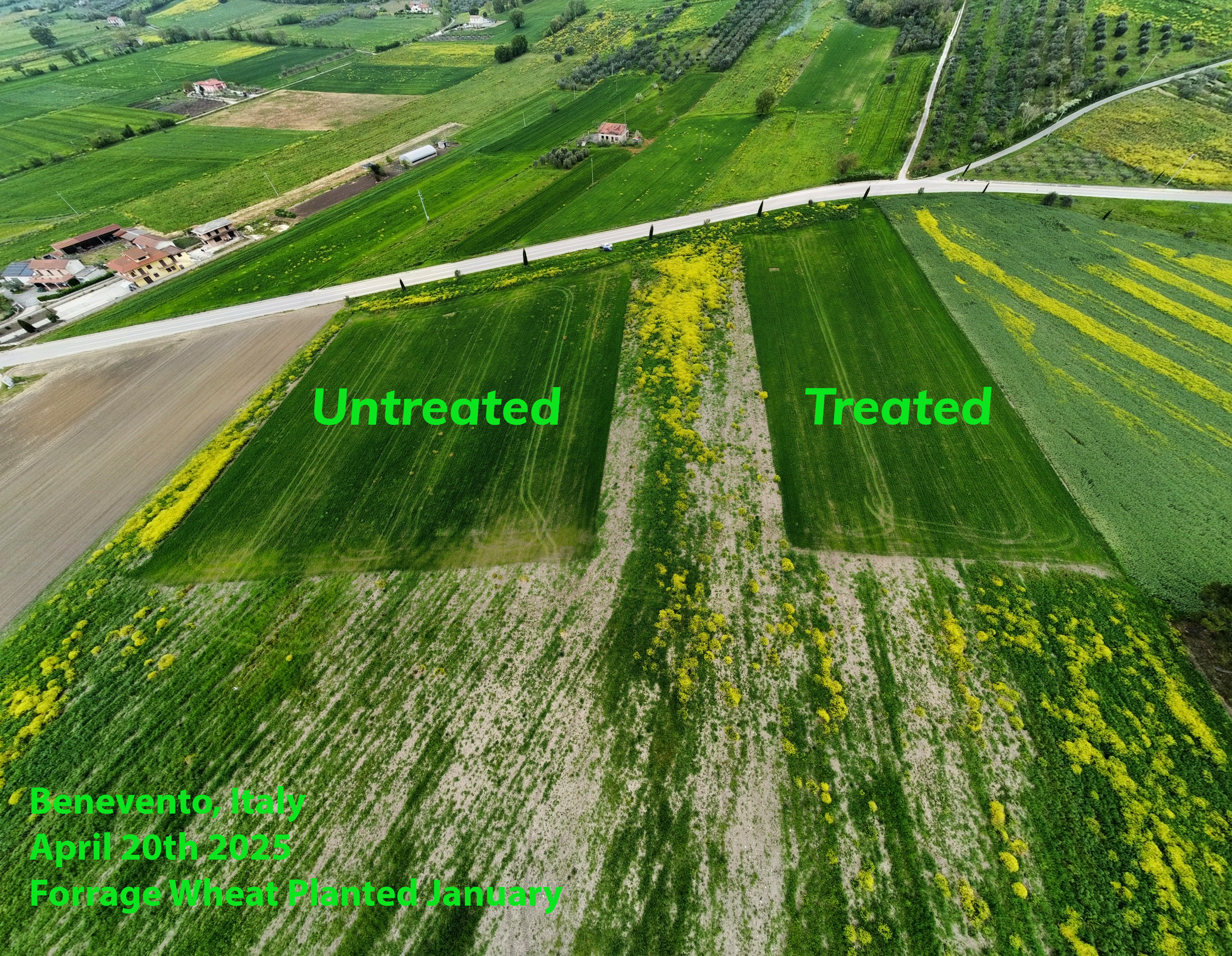
University-verified yield increase in durum wheat trials with +9.1% protein spike.
Organic potato yield gains using Câr-y-Môr cold-extracted vertical seaweed biomass.
Over 185 times more concentrated than standard agricultural inoculants in the UK.
Audited permanent CO2 sequestration per acre under Verra VM0042 methodology.
Use Cases & Agronomic Verticals
01. Row Crops
Vigorous mycorrhizal networks optimize root development and grain fill across wheat, barley, maize, and soy.
02. Vegetables
Massive nutrient absorption and antioxidant spikes verified in global broadacre tomato and cucumber trials.
03. Arboriculture & Forestry
Accelerated root sapling scaling, permanent aggregate structural binding, and stable glomalin carbon storage.
04. Soil & Land Remediation
Unequivocal university validation of mycorrhizal inoculants protecting host plants from acute heavy metal toxicity in highly degraded industrial soils.
The Subterranean Biological Transition: Strategic & Agronomic Foundations
The global agricultural system is currently navigating a profound structural transition. Decades of synthetic chemical fertilization have led to severe ecological imbalances, widespread soil desertification, and the total simplification of the subterranean soil food web. The historical over-reliance on highly soluble phosphate fertilizers has resulted in a global biochemical lock-up: up to 80% of applied phosphorus binds immediately with calcium in alkaline soils or iron and aluminum in acidic soils, forming highly insoluble complexes. This locked-up resource is known as "legacy phosphorus"—banked deeply in the soil but completely physically and chemically inaccessible to standard crop root systems.
To unlock this free subterranean wealth and facilitate a transition away from synthetic agrochemical dependency, we must utilize advanced biological networks. Sourced from hyper-arid deserts, our specific endo-mycorrhizal fungal strains (primarily Rhizophagus irregularis) possess deep, inherent genetic resilience to severe abiotic stress. Upon application, these dormant propagules detect hormonal gradients (strigolactones) released by the crop, germinating to construct microscopic exchange sites called arbuscules directly within the root cortical cells.
Simultaneously, the fungi extend a vast, highly complex network of microscopic hyphae deep into the surrounding soil matrix. Because these hyphae are significantly narrower than plant root hairs, they penetrate soil micropores entirely inaccessible to the crop. This effectively increases the plant's active absorptive surface area by a factor of up to 100. In exchange for plant sugars (carbon), the fungal network actively scavenges the expanded soil volume, delivering water, nitrogen, zinc, copper, and dissolved legacy phosphorus directly back to the host crop.
However, deploying high-density mycorrhizae across intensive agricultural systems requires navigating a severe biochemical limitation. When crops experience high ambient levels of soluble phosphorus from conventional starter fertilizers, they calculate that feeding a fungal network is metabolically "too expensive." The plant actively shuts down strigolactone hormone release. The spores remain asleep, colonization fails, and the biological investment is entirely rejected by the crop. To overcome this Phosphorus Inhibition (P-Inhibition), conventional growers must reduce starter phosphorus inputs by 30% to 50%, forcing the crop to activate its hormonal signaling pathways and initiate the symbiosis naturally.
Finally, to optimize this subterranean transition and prevent our dominant fungal strains from outcompeting native microflora during the initial colonization phase, we introduce the "Ecological Bridge" strategy. By bundling our fungal inoculants with premium cold-extracted vertical kelp biomass from Wales (Câr-y-Môr), we deliver a massive infusion of complex marine carbons, osmo-protectants, trace elements, and natural plant hormones. This feeds and stabilizes the localized soil foodweb, maximizing plant metabolic and photosynthetic potential.